
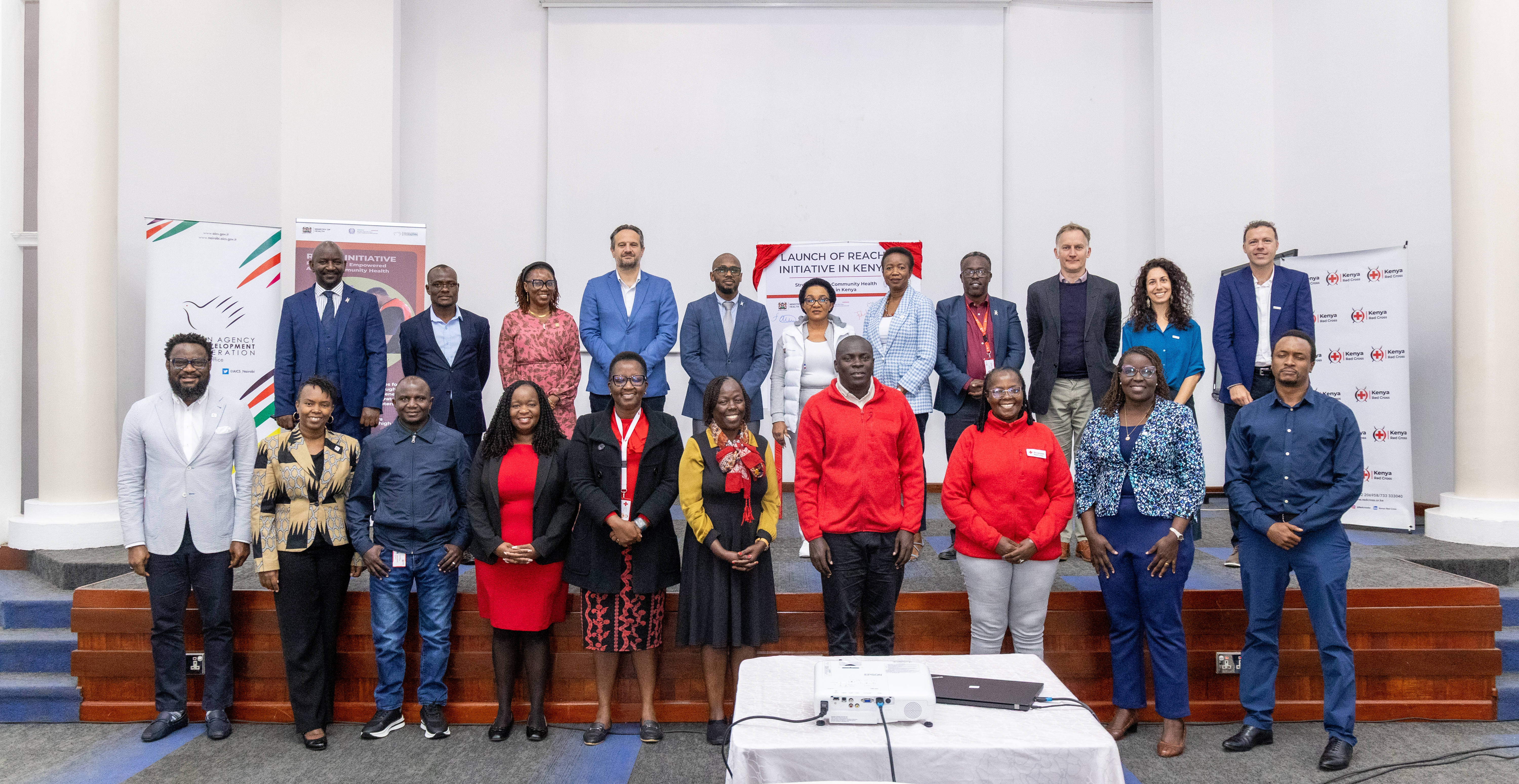
Nairobi, 04/06/2026 – The Kenyan chapter of the “Resilient and Empowered African Community Health (REACH)” initiative was officially launched today in Nairobi, with the aim of strengthening community health systems in the country’s most vulnerable areas. The launch ceremony was attended by Fabio Minniti, Director of the Nairobi Office of the Italian Agency for Development Cooperation (AICS), representatives of Kenya’s Ministry of Health, the Africa Centres for Disease Control and Prevention (Africa CDC), the International Federation of Red Cross and Red Crescent Societies (IFRC), as well as the Italian Red Cross and the Kenya Red Cross Society, underscoring the importance of a multi-stakeholder approach to addressing the health challenges faced by vulnerable communities.
Funded by the Italian Cooperation with a contribution of EUR 2 million and implemented by IFRC in partnership with the Kenya Red Cross Society, the initiative will operate in the arid and semi-arid counties of Isiolo, Baringo, West Pokot, Nandi, Tana River, Lamu and Wajir, directly reaching more than 1.2 million people. The project represents the Kenyan chapter of a continent-wide programme led by IFRC and Africa CDC, which aims to recruit and train 2 million Community Health Workers across Africa by 2029.
In a context where access to primary healthcare services remains limited in many rural and semi-arid areas of Kenya, Community Health Promoters play a vital role as the first point of contact between families and the formal health system, promoting disease prevention, maternal and child health, and access to essential healthcare services. The programme will support 3,500 Community Health Promoters, helping to improve access to healthcare for populations that are often excluded from essential services, including persons with disabilities, refugees, internally displaced people and communities affected by climate shocks. Each promoter will be responsible for approximately seventy households, thereby strengthening a community-based healthcare network capable of reaching some of the country’s most remote areas.
The programme’s activities will also include the integration of digital modules into the national Electronic Community Health Information System (eCHIS) and the implementation of training-of-trainers programmes to ensure the quality and continuity of services. In addition, the project will promote the active participation of communities in assessing health services and will contribute to strengthening the role of Community Health Promoters in the planning and financing of local health systems, fostering a more sustainable, equitable and resilient model in line with Kenya’s pathway towards Universal Health Coverage by 2030.