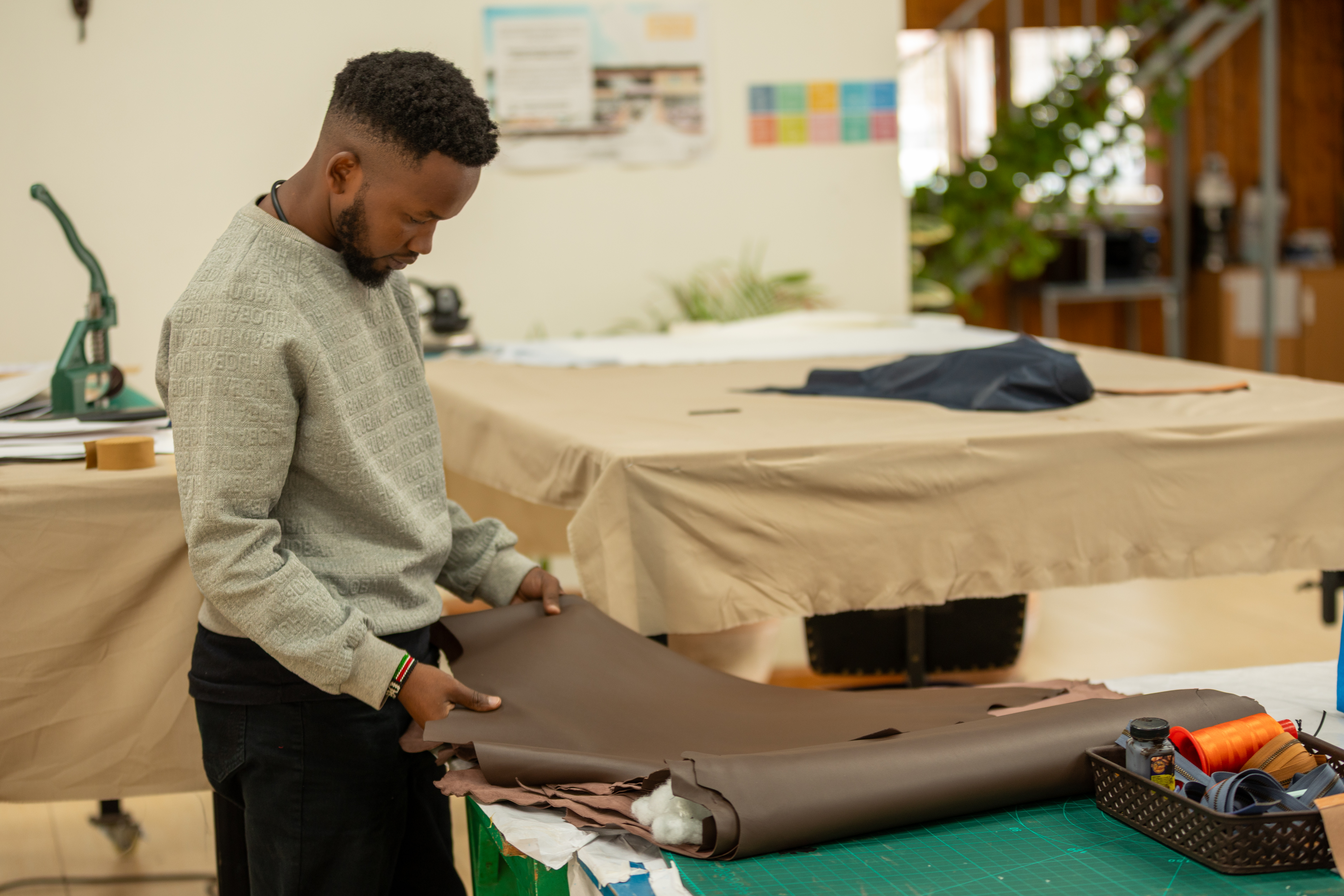
Davis’ hands move deftly across a piece of leather, his eyes scanning the texture and quality as he prepares for another production run at Don Bosco Boys Town in Karen, Nairobi.
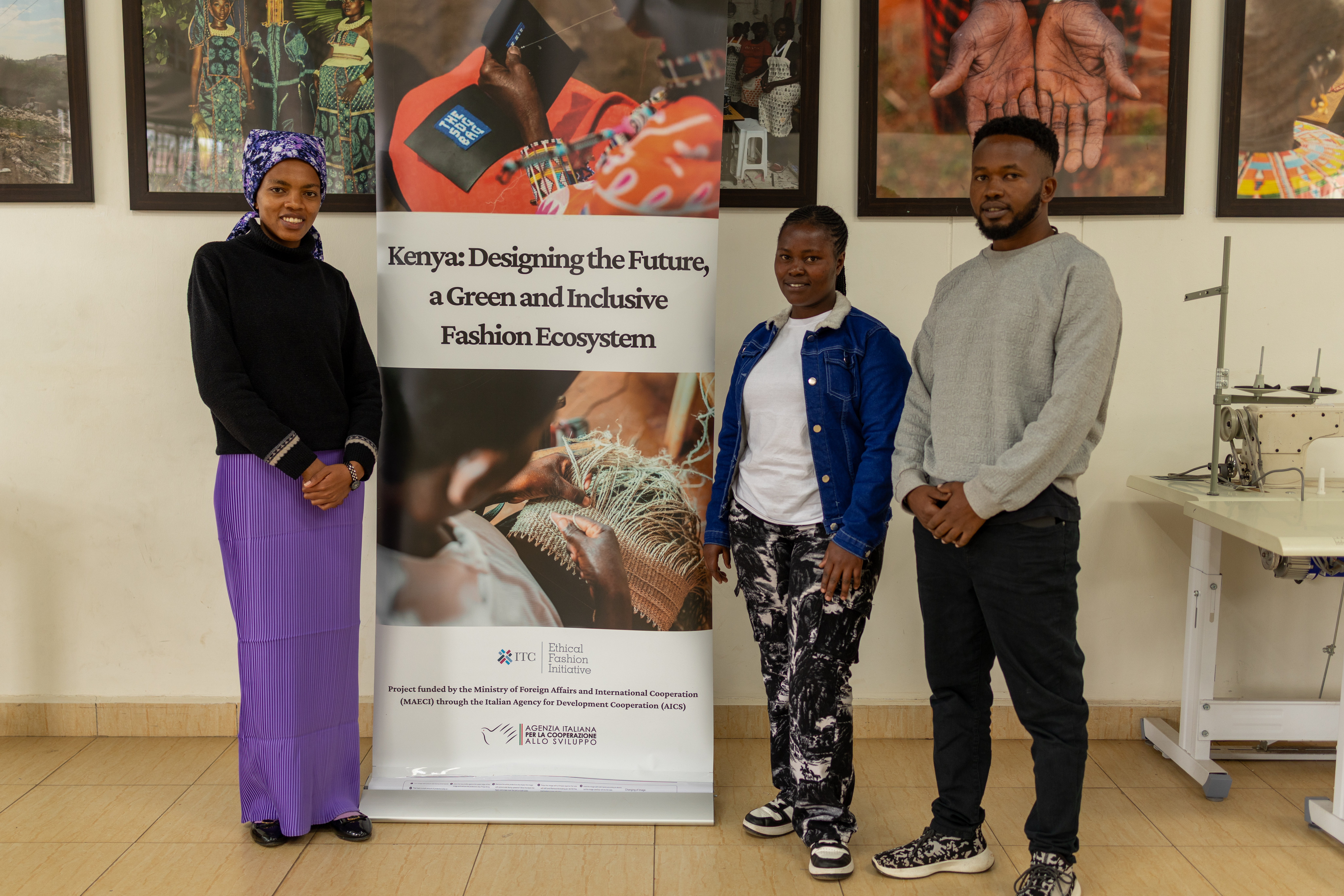
Davis is a designer and leather technologist who recently graduated from the Leather Bags Production Training at Don Bosco Boys Town Technical Institute, a four-month programme held between August and December 2025 which involved 38 participants. The training was delivered under the guidance of two cutting-edge actors in the Italian leather industry, Assopellettieri and the Made in Italy Tuscany Academy (MITA), with the aim of equipping young Kenyans with high-quality skills to enhance employability, strengthen the competitiveness of Kenya’s leather sector, and open pathways to new global opportunities. The training was part of the Italian Cooperation-funded initiative “Designing the Future: A Green and Inclusive Fashion Ecosystem for Kenya” implemented by the International Trade Centre (ITC) under the Ethical Fashion Initiative which aims to support small and medium enterprises and artisanal cooperatives, with a strong focus on resilient growth, climate action, and social inclusion, particularly for women and youth.
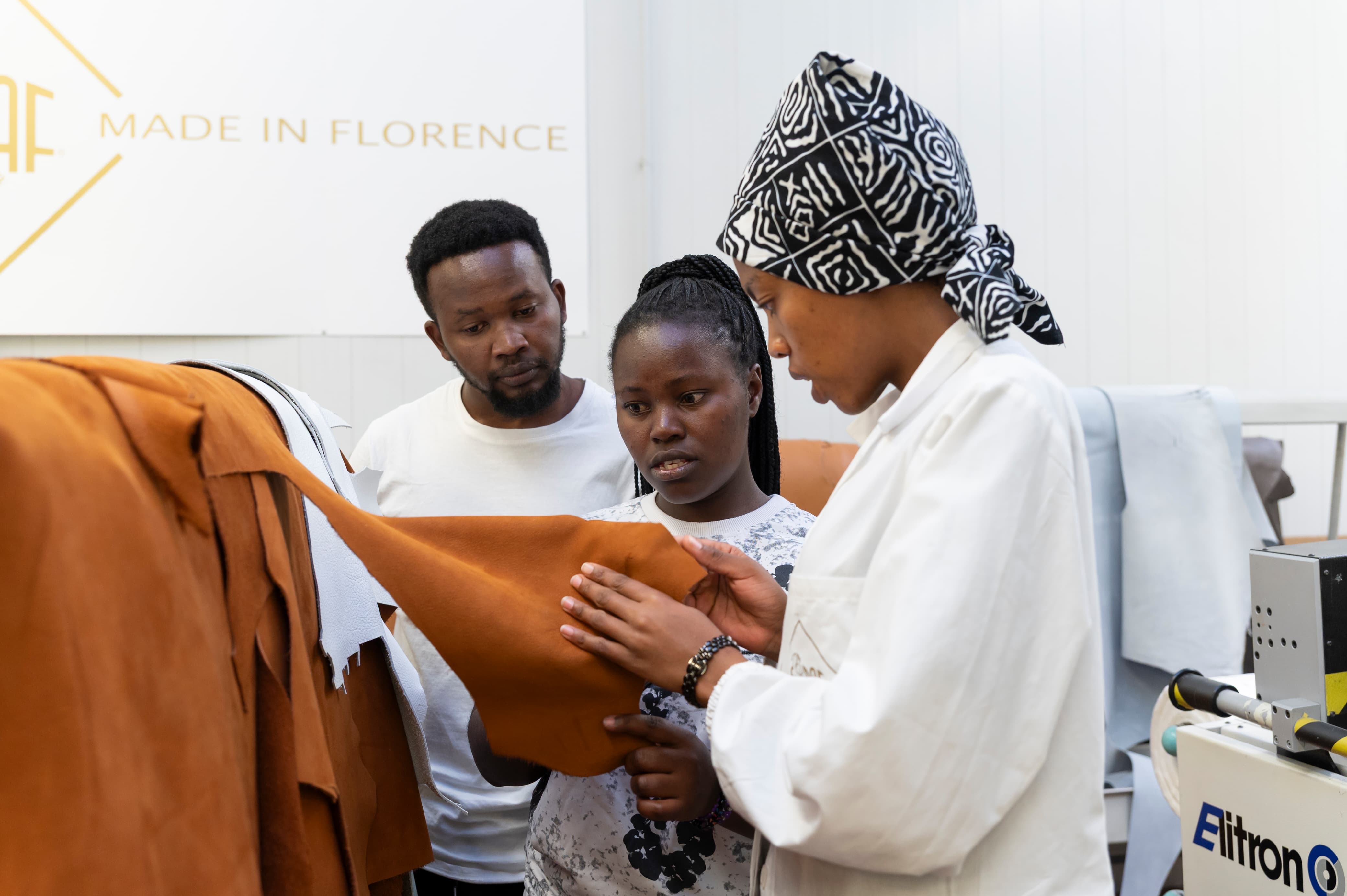
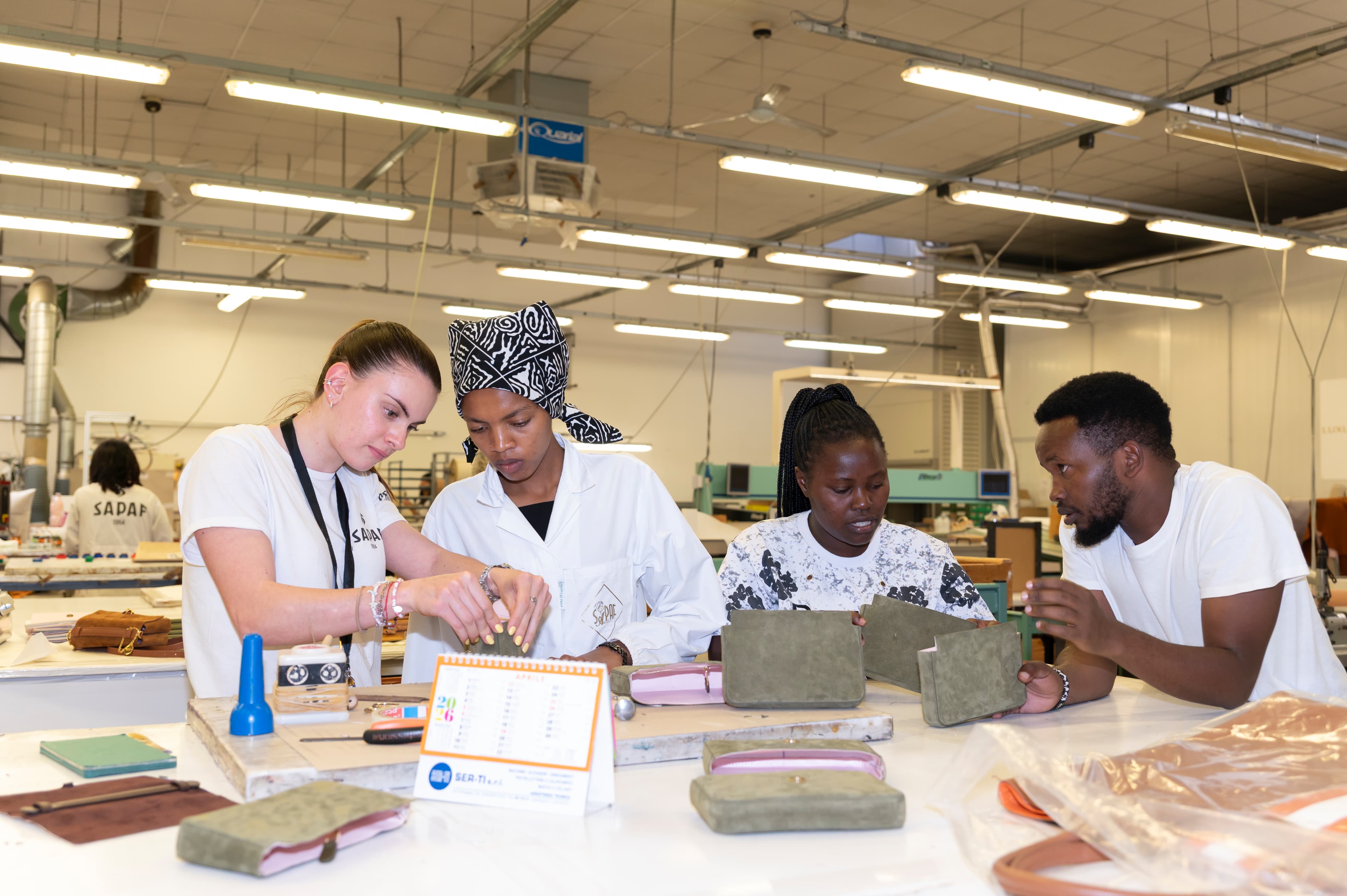
Together with his colleagues Zipporah and Virginiah, Davis has just returned from a three-week apprenticeship with leather factories in the municipality of Scandicci, near Florence, Italy — a placement they earned as the top three students in their cohort, having been awarded traineeships with leading leather manufacturing companies in the country at the end of the training.
“This experience in Italy has been incredibly enriching,” he said. “I had the opportunity to work alongside seasoned professionals, operate cutting-edge machinery, and develop new cutting and stitching techniques.” With the leather sector representing one of Kenya’s most important and fast-growing industries, Davis is convinced that this experience will open new doors for his career, and for the one of thousands of young Kenyans drawn to the world of fashion and leather production, and he is determined to contribute to it by sharing the skills and techniques that he gained over the past months with his peers.
His words are echoed by his colleague Zipporah, who recounts how this has been one of the most inspiring experiences of her fashion journey so far, and which has allowed her to elevate her sewing skills to a new level. “I dream of opening my own leather workshop one day, so I can pass this knowledge on to other young people as this is a sector with huge potential for Kenya’s industry and for creating job opportunities,” she said. “This experience has brought me one step closer to that dream.”
“I have always had a passion for tailoring — it’s something I grew up with, as my father owned a tailoring shop in Kajiado County, about 120 km south of Nairobi, where I come from,” said Virginiah Ndungu Wanjiru. “He taught me my first steps in sewing and stitching. However, it was only during my training with the Ethical Fashion Initiative at Don Bosco Boys Town that I realised my true passion was stitching bags. Seeing the finished product always fills me with joy and pride, and that is why this internship in Italy was a unique opportunity to learn and grow in this field.”
For her, the experience was pivotal in deepening her understanding of finishing and quality control — two hallmarks of Made in Italy craftsmanship. She believes the transfer of technology and know-how in design and finishing, made possible through programmes like this one, represents real added value for the industry, helping to elevate the standard and reputation of Made in Kenya products on the global stage.
This type of technology and knowledge transfer in strategic sectors such as leather is closely aligned with the Mattei Plan for Africa, Italy’s framework for cooperation with the continent. The Plan promotes equal and long-term partnerships rooted in practical knowledge sharing, positive spillover effects, and the advancement of endogenous and sustainable development in partner countries. In line with this approach, Italy has recently approved a €35 million programme to support the development of Kenya’s leather value chain which marks another milestone in the long-standing partnership between Italy and Kenya. The programme aims to strengthen the competitiveness of the Kenyan leather sector in both domestic and international markets.
As Davis, Virginiah and Zipporah return from this journey with new skills, inspiration and ideas to share with other young Kenyans, initiatives like this one are stitching together a new chapter for the country’s leather industry — one apprenticeship at a time.
Background Information
“Designing the Future: A Green and Inclusive Fashion Ecosystem for Kenya” is a €5 million initiative funded by the Italian Cooperation and implemented by the International Trade Centre’s Ethical Fashion Initiative (EFI), running from January 2024 to January 2027. The project directly involves approximately 2,000 between artisans, micro-producers and design entrepreneurs — predominantly women and young people from marginalised communities — through specialised training programmes developed in partnership with leading fashion and leather industry actors, creating pathways to dignified and lasting employment. It aims to enhance the competitiveness and participation of micro and small craft enterprises and designers in Kenya within the international, regional and national sustainable value chains of the fashion and lifestyle industry.
Beyond training initiatives such as the leather bag programme delivered in partnership with Assopellettieri and MITA, the project has achieved significant for instance through the establishment of Tujikuze Ethical Fashion Limited, a social enterprise with local craft cooperatives as shareholders and with a strong focus on women’s inclusion; the upgrade of two production sites in Karen and Babadogo; the fulfilment of significant international orders, including a contract with Italian retail group CONAD worth €540,000; and the strengthening of beneficiaries’ international profile through participation in leading trade fairs such as Lineapelle and Milan Fashion Week. The initiative has also promoted social cohesion among traditionally rival communities, contributing to local peace and stability.