
Tanganyika, Eastern DRC, 19 August 2026
In crisis contexts, humanitarian midwives are often among the first frontline responders, playing a pivotal role in saving the lives of women and newborns, traveling long distances to remote places, supporting survivors of gender-based violence, assisting emergency deliveries. Yet their role is often undervalued and not adequately acknowledged.
On the occasion of World Humanitarian Day, we shed light on — and honor — the work that humanitarian midwives are carrying out in the conflict-affected eastern Democratic Republic of Congo (DRC), precisely in Tanganyika province, where UNFPA has been implementing an emergency initiative to enhance sexual and reproductive health and gender-based violence (GBV) response funded by the Italian Cooperation.
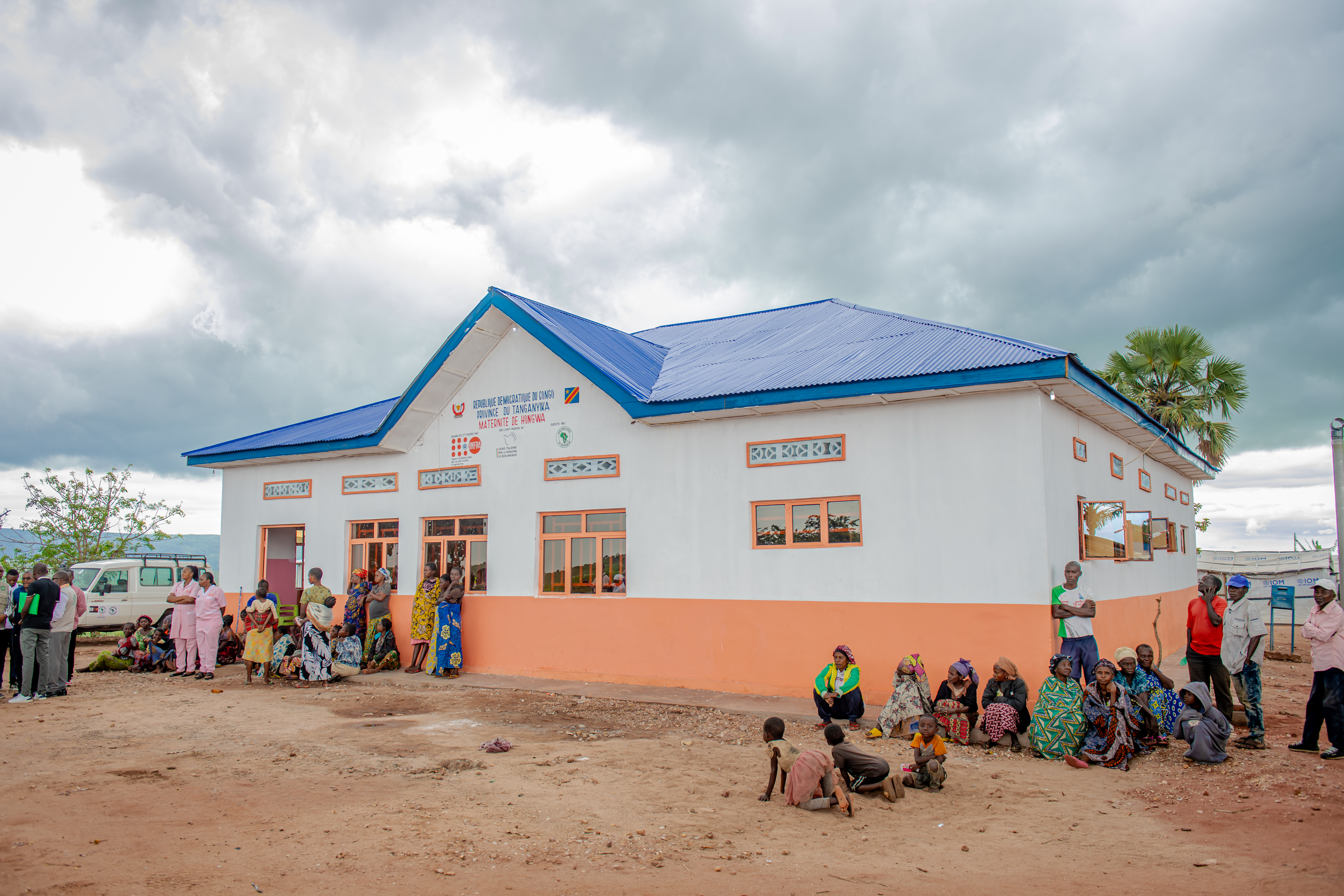
As part of the project, in 2025, a new maternity ward was opened in Hongwa village, bringing renewed hope to thousands of displaced women living in the area. Since then, the facility has become a lifeline: thousands of women have received sexual and reproductive health care and GBV support services, hundreds of prenatal consultations have taken place, and nearly 2,000 births have been safely assisted by qualified personnel.
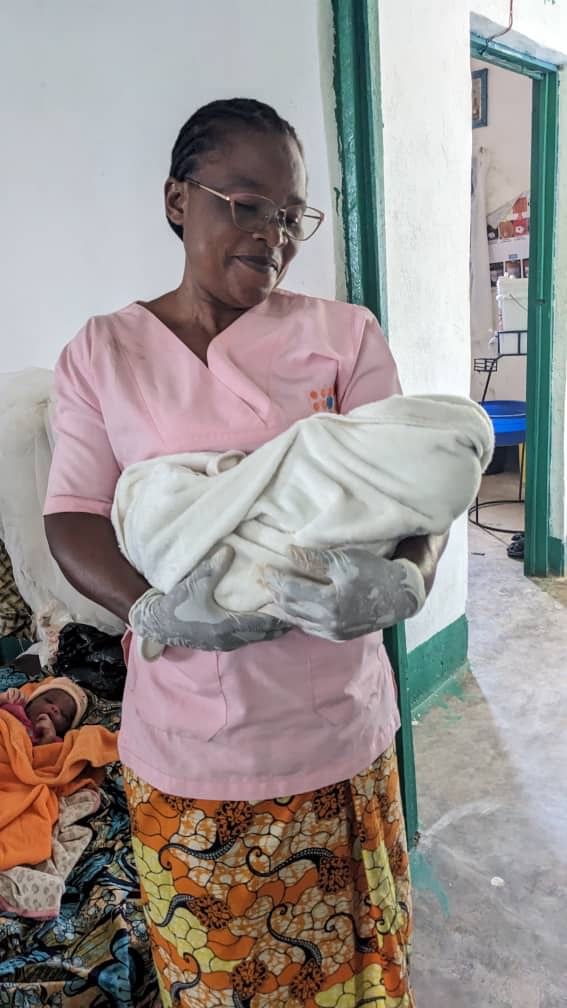
Betty at work at Hongwa Maternity Ward
Behind these numbers are women like Betty, a 56-year-old humanitarian midwife who has spent more than five years working in displacement sites across the province.
Can you introduce yourself?
My name is Betty. I’m a trained humanitarian midwife from DRC, and I’ve been deployed to several displacement sites over the past five years— most recently to Kabimba, and before that to Hongwa, where UNFPA has built the maternity ward.
What does a typical workday look like for you?
We midwives carry out our work in vulnerable communities, such as camps for displaced people. Our target audience is women of childbearing age, especially teenagers, while we also engage their husbands. We educate them about family planning, and antenatal care: we raise awareness among pregnant women, so they start their check-ups in the first trimester. The most important thing is to raise awareness about warning signs, because there are too many women who are unaware of them, and they arrive at health facilities much too late, leading to maternal deaths. That’s when we step in. For example, we hold awareness days. We tell women that as soon as they notice a warning sign — bleeding, a severe headache —they need to go to the nearest health center right away. We also raise awareness about family planning, which is often seen as taboo. And when there’s a delivery, we assist with it. If there are complications, we refer the woman to a referral center.
What are the main challenges facing pregnant women today, in the context where you work?
The challenges are many. There’s a lack of access to quality care provided by qualified personnel such as midwives. There are only about 40 midwives currently employed across the whole province. Yet midwives are the professionals best suited for this work. Many maternal deaths happen because of postpartum hemorrhage, and midwives are trained precisely for that. Women also struggle to reach facilities, because there’s no transportation, no ambulances, and roads are often impassable, for instance during rainy seasons. All of this contributes to a very high rate of maternal and perinatal deaths in our region.
Could you share a story that illustrates the impact of your work?
I was assigned to Toundoua, about 10 kilometers from the Hongwa maternity ward. One night at around 1 a.m., a 16-year-old first-time mother arrived in labor. As I monitored her, I realized that she had narrow pelvis and would not be able to deliver safely without a caesarean section. Because I was working alone and the procedure could not be performed on site, I referred her urgently to the maternity. At first, her family refused because people here often prefer to give birth at home, rather than in health facilities. I spoke with her husband and relatives several times, explaining the risks and reassuring them about the referral. Eventually, they agreed to the transfer. Two days later, I went to Hongwa to follow up, and I found the woman with her child — smiling next to her husband. At that moment I was happy, because we had saved the mother and her baby, and brought a smile back to that family’s faces.
How do conflict and displacement affect women and newborns?
Conflict has a major impact, because it further limits access to quality care, and many women end up giving birth in unsafe conditions, sometimes even in the bush as they flee for their lives. I remember once, at a facility, they brought me a baby who was a few days old. When I asked who had delivered the child, the father explained that the birth had taken place while they were displaced. He told me that he had cut the baby’s umbilical cord himself using a piece of paper because they had no access to medical care or basic delivery supplies. During conflict, there is also a rise in sexual and GBV, and women are more exposed to exploitation and harassment. Families often avoid health centers out of fear or lack of access, turning to less safe traditional remedies instead.
How has the UNFPA project, supported by Italian Cooperation, changed things?
I am truly thankful for this project. It built us a maternity ward, and now all the pregnant women with complications are referred there, instead of travelling up to 70 km to reach essential healthcare. Take a uterine rupture, for example: a woman with that condition would die on the way, from hemorrhage and hypovolemic shock, and the baby would suffocate. Now that risk is significantly reduced. The maternity also has an operating theatre to ensure high-quality management of complications, including caesarean sections. The project has also supported reproductive health services more broadly — women and girls received free care during this period, which brought down the maternal mortality rate in the community. The construction of this maternity ward has helped the population a great deal. Needs remain dire, though: portable ultrasound machines so midwives can monitor pregnant women in the community, maternity waiting homes for high-risk pregnancies, and — above all — more midwives, since every additional one is a chance to save lives.
Given everything you face, what gives you hope and motivation to keep doing this work?
My hope is that every pregnant woman gives birth in safe, skilled hands. My motivation is that I love this work — it’s lifesaving, for mothers and newborns alike. A woman often arrives frightened or in distress; helping her through and seeing her leave with a healthy baby and a smile reminds me why this matters. Knowing I can make a difference is what keeps me going. It’s a privilege to serve my community, and I’ll keep doing this work as long as I can.
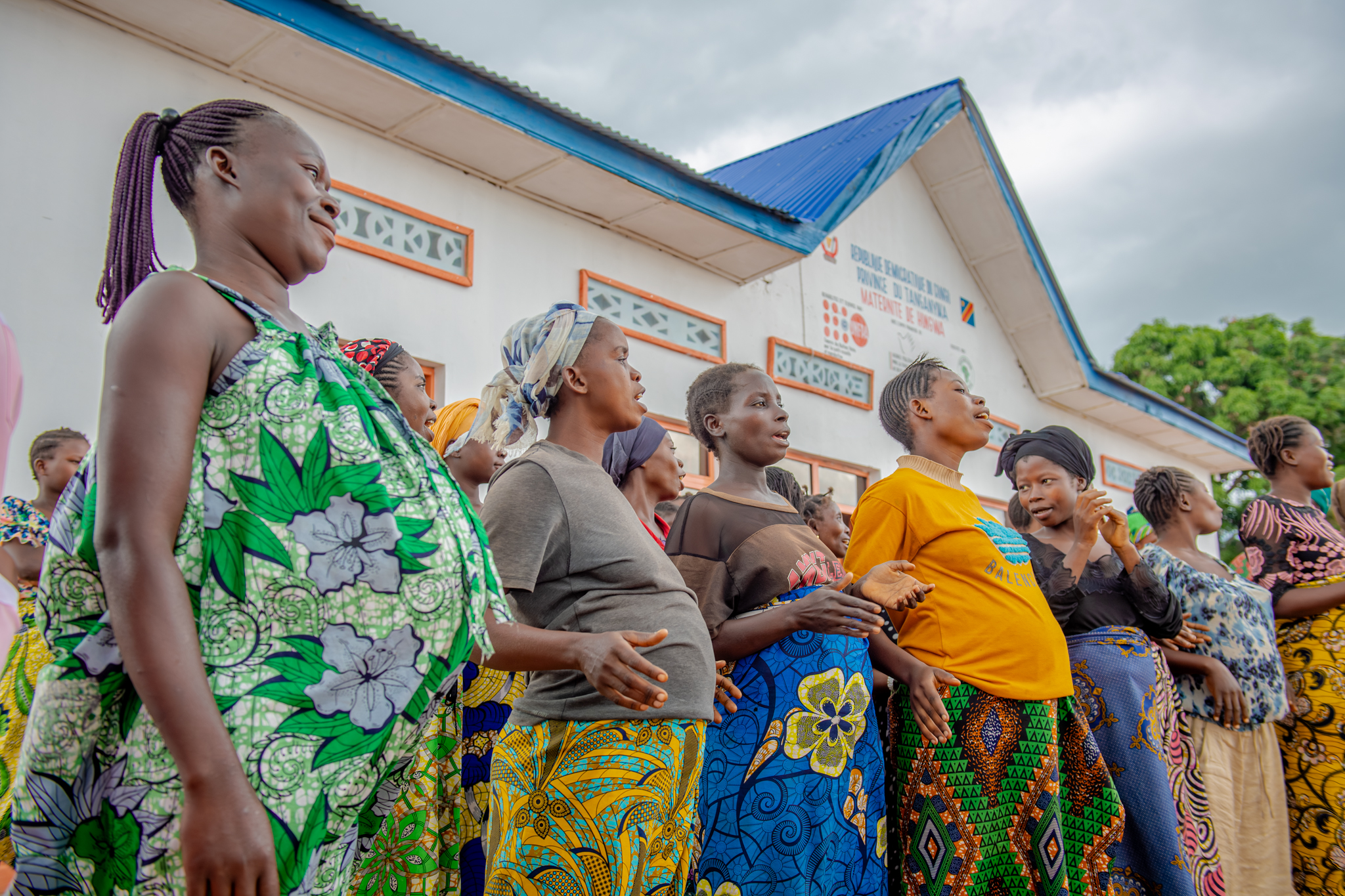
A group of women celebrates the inauguration of Hongwa Maternity Ward in Tanganyika, eastern DRC